

Philippines Cloud Security Market Forecast 2026-2034 | Size, Share, Report
Philippines Cloud Security Market
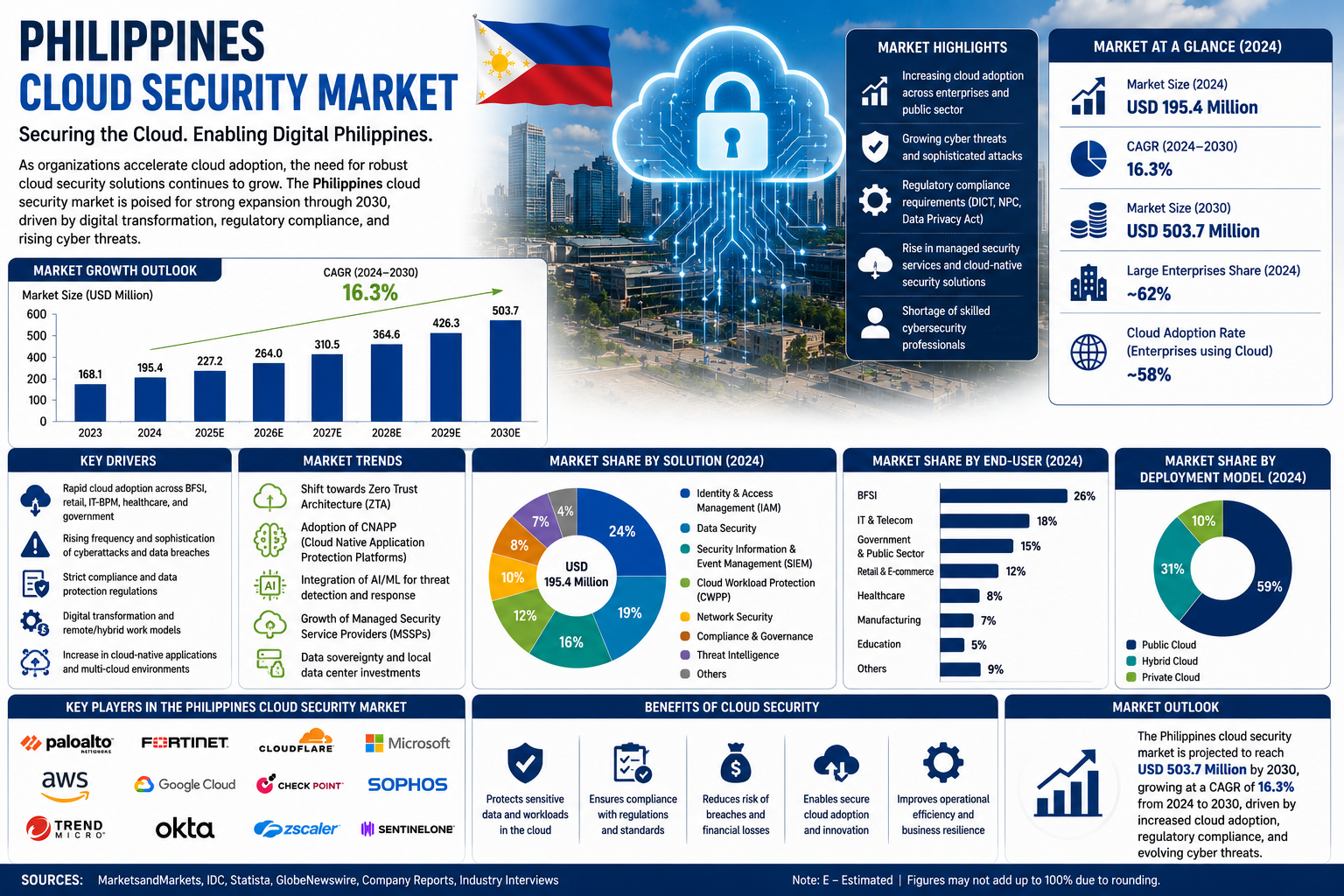
Philippines cloud security market valued at USD 1,752.44 Million 2025, is projected to reach USD 4,560.76 Million 2034, growing at a CAGR of 11.21% 2026-2034.
PHILIPPINES, May 19, 2026 /EINPresswire.com/ --𝗠𝗮𝗿𝗸𝗲𝘁 𝗢𝘃𝗲𝗿𝘃𝗶𝗲𝘄:
The Philippines cloud security market reached 𝗨𝗦𝗗 𝟭,𝟳𝟱𝟮.𝟰𝟰 𝗠𝗶𝗹𝗹𝗶𝗼𝗻 in 2025 and is projected to reach 𝗨𝗦𝗗 𝟰,𝟱𝟲𝟬.𝟳𝟲 𝗠𝗶𝗹𝗹𝗶𝗼𝗻 by 2034, exhibiting a growth rate (𝗖𝗔𝗚𝗥) 𝗼𝗳 𝟭𝟭.𝟮𝟭% 𝗱𝘂𝗿𝗶𝗻𝗴 𝟮𝟬𝟮𝟲–𝟮𝟬𝟯𝟰. The Philippines is experiencing a rapid acceleration in cloud security investment, driven by the government's cloud-first digital transformation strategy, an intensifying cyber threat landscape — with a 49% surge in data breaches in Q3 2025 alone, exposing over 52 million credentials — and strengthening regulatory mandates from the DICT and the Bangko Sentral ng Pilipinas. The country's IT services market has reached USD 5.7 billion, with the DICT's eGovDX platform now connecting over 1,000 government services and processing more than 500 million secure transactions, underscoring the critical and expanding need for robust cloud security solutions across government, BFSI, BPO, and enterprise sectors.
𝗪𝗵𝘆 𝗶𝘀 𝗛𝗼𝘁 𝗧𝗼𝗱𝗮𝘆 𝗣𝗵𝗶𝗹𝗶𝗽𝗽𝗶𝗻𝗲𝘀 𝗖𝗹𝗼𝘂𝗱 𝗦𝗲𝗰𝘂𝗿𝗶𝘁𝘆 𝗠𝗮𝗿𝗸𝗲𝘁?
The DICT mandated zero-trust frameworks and secure software development practices under the Konektadong Pinoy Act's implementing rules in October 2025; the Philippines recorded a 49% surge in data breaches in Q3 2025 exposing over 52 million credentials; 34,839 phishing incidents were reported throughout 2025; the BSP launched its Financial Services Cyber Resilience Plan 2024–2029 to strengthen digital financial infrastructure defenses; Globe Business partnered with U.S.-based Zscaler to bring zero-trust cloud security services to Philippine enterprises; and Agents Stack entered the Philippine market in July 2025, introducing AI-driven cybersecurity and cloud optimization services for government, banking, telecom, and manufacturing sectors.
𝗣𝗵𝗶𝗹𝗶𝗽𝗽𝗶𝗻𝗲𝘀 𝗖𝗹𝗼𝘂𝗱 𝗦𝗲𝗰𝘂𝗿𝗶𝘁𝘆 𝗠𝗮𝗿𝗸𝗲𝘁 Summary:
• The Philippines is facing a rapidly intensifying cyber threat landscape, with data breaches surging 49% in Q3 2025 and exposing over 52 million credentials in just three months. Fortinet's Global Cybersecurity Skills Gap Report revealed that 94% of Philippine organizations experienced at least one security breach, while Viettel Threat Intelligence documented 34,839 phishing incidents throughout 2025 — driving enterprises across BFSI, government, and BPO sectors to accelerate investment in cloud-native security platforms, threat intelligence tools, and managed detection and response services.
• The DICT's mandate for zero-trust frameworks under the Konektadong Pinoy Act (Republic Act 12234) — which lapsed into law in August 2025 — is compelling data transmission and internet providers to adopt continuous verification, micro-segmentation, and secure software development practices. All new infrastructure providers must secure ISO-aligned cybersecurity certification within two years of registration, creating a regulatory-driven demand surge for identity-centric cloud security architectures across the Philippines' digital ecosystem.
• The BFSI sector is leading cloud security adoption, with the BSP launching its Financial Services Cyber Resilience Plan 2024–2029 and strengthening cloud computing and cybersecurity risk management guidelines requiring continuous monitoring, configuration oversight, and compliance controls. The rapid expansion of digital banking platforms — with six BSP-licensed digital banks now operating alongside growing mobile payment ecosystems and fintech services — is significantly expanding the threat surface and driving demand for specialized encryption, behavioral biometrics, API security, and fraud detection solutions.
• The government's cloud-first strategy is generating substantial institutional demand, with the DICT's eGovDX platform connecting over 1,000 government services and processing more than 500 million secure transactions. The GovCloud program is requiring national and local agencies to prioritize secure cloud migration, while the National Cybersecurity Plan 2023–2028 under Executive Order No. 58 is establishing a coordinated framework to protect critical infrastructure — collectively driving procurement of cloud access security brokers, posture management tools, and identity governance solutions across hundreds of government agencies.
• Hyperscale data center investment is expanding the Philippines' cloud infrastructure foundation, with ePLDT announcing plans for a 100 MW AI-ready hyperscale facility in South Luzon. Major international cloud providers are establishing local availability zones and data center regions, addressing data sovereignty requirements and reducing latency — making public cloud a more viable option for regulated Philippine industries and creating growing demand for cloud workload protection, encryption, and compliance monitoring solutions tailored to localized infrastructure.
𝗛𝗼𝘄 𝗔𝗜 𝗶𝘀 𝗥𝗲𝘀𝗵𝗮𝗽𝗶𝗻𝗴 𝘁𝗵𝗲 𝗣𝗵𝗶𝗹𝗶𝗽𝗽𝗶𝗻𝗲𝘀 𝗖𝗹𝗼𝘂𝗱 𝗦𝗲𝗰𝘂𝗿𝗶𝘁𝘆 𝗠𝗮𝗿𝗸𝗲𝘁:
Artificial intelligence is fundamentally transforming the Philippines cloud security landscape, enabling organizations to detect sophisticated cyber threats in real time, automate incident response at machine speed, and predict attack vectors before they materialize — critical capabilities as Philippine enterprises confront a 49% surge in data breaches and an increasingly complex multi-cloud environment where traditional perimeter-based security approaches can no longer protect distributed workloads, remote users, and interconnected digital services.
• 𝗔𝗜-𝗣𝗼𝘄𝗲𝗿𝗲𝗱 𝗧𝗵𝗿𝗲𝗮𝘁 𝗗𝗲𝘁𝗲𝗰𝘁𝗶𝗼𝗻 𝗮𝗻𝗱 𝗥𝗲𝘀𝗽𝗼𝗻𝘀𝗲: AI-driven Security Information and Event Management (SIEM) platforms are enabling Philippine enterprises to analyze millions of security events in real time, using machine learning to detect anomalous patterns, lateral movement, and zero-day threats that evade traditional signature-based defenses. Microsoft's Secure Future Initiative — launched in the Philippines — is integrating AI-based cyber defenses and enhanced cloud identity protection, enabling organizations to automate threat containment and reduce incident response times from hours to minutes.
• 𝗔𝗜-𝗗𝗿𝗶𝘃𝗲𝗻 𝗭𝗲𝗿𝗼 𝗧𝗿𝘂𝘀𝘁 𝗮𝗻𝗱 𝗜𝗱𝗲𝗻𝘁𝗶𝘁𝘆 𝗔𝗻𝗮𝗹𝘆𝘁𝗶𝗰𝘀: AI-enhanced zero-trust platforms are continuously verifying user identities, device health, and behavioral patterns to grant dynamic, risk-based access to cloud resources — replacing static credential-based authentication with adaptive intelligence that detects compromised accounts, unusual login locations, and privilege escalation attempts in real time across Philippine enterprise and government cloud environments.
• 𝗣𝗿𝗲𝗱𝗶𝗰𝘁𝗶𝘃𝗲 𝗧𝗵𝗿𝗲𝗮𝘁 𝗜𝗻𝘁𝗲𝗹𝗹𝗶𝗴𝗲𝗻𝗰𝗲 𝗮𝗻𝗱 𝗣𝗵𝗶𝘀𝗵𝗶𝗻𝗴 𝗗𝗲𝗳𝗲𝗻𝘀𝗲: Machine learning models trained on global threat intelligence feeds are enabling Philippine organizations to predict and preemptively block emerging attack campaigns before they reach cloud environments. With 34,839 phishing incidents documented in the Philippines, AI-powered email security and anti-phishing platforms are analyzing message metadata, URL behavior, and sender reputation to intercept social engineering attacks targeting cloud credentials and sensitive data.
• 𝗔𝗜-𝗘𝗻𝗵𝗮𝗻𝗰𝗲𝗱 𝗖𝗹𝗼𝘂𝗱 𝗣𝗼𝘀𝘁𝘂𝗿𝗲 𝗠𝗮𝗻𝗮𝗴𝗲𝗺𝗲𝗻𝘁: AI-powered Cloud Security Posture Management (CSPM) tools are continuously scanning Philippine enterprise cloud environments for misconfigurations, compliance gaps, and security drift — automatically remediating vulnerabilities before they can be exploited. These tools use machine learning to prioritize risks based on exploitability and business impact, helping security teams manage multi-cloud complexity while maintaining alignment with BSP, DICT, and international compliance frameworks.
• 𝗔𝗜-𝗣𝗼𝘄𝗲𝗿𝗲𝗱 𝗦𝗢𝗖 𝗔𝘂𝘁𝗼𝗺𝗮𝘁𝗶𝗼𝗻 𝗮𝗻𝗱 𝗧𝗮𝗹𝗲𝗻𝘁 𝗔𝘂𝗴𝗺𝗲𝗻𝘁𝗮𝘁𝗶𝗼𝗻: AI-driven Security Operations Center (SOC) automation is helping Philippine organizations address the acute cybersecurity talent shortage by handling alert triage, log correlation, and routine investigation tasks — enabling smaller security teams to manage enterprise-scale cloud environments effectively. Automated playbooks and AI copilots are reducing analyst workload by up to 60%, a critical advantage in the Philippines where skilled cybersecurity professionals remain scarce.
𝗥𝗲𝗾𝘂𝗲𝘀𝘁 𝗳𝗼𝗿 𝗮 𝘀𝗮𝗺𝗽𝗹𝗲 𝗿𝗲𝗽𝗼𝗿𝘁 𝗣𝗗𝗙: https://www.imarcgroup.com/philippines-cloud-security-market/requestsample
𝗠𝗮𝗿𝗸𝗲𝘁 𝗧𝗿𝗲𝗻𝗱𝘀 𝗮𝗻𝗱 𝗜𝗻𝘀𝗶𝗴𝗵𝘁𝘀:
• The regulatory-driven adoption of zero-trust architectures is accelerating across the Philippines, with the DICT mandating zero-trust frameworks under the Konektadong Pinoy Act and the BSP tightening cybersecurity requirements through its Financial Services Cyber Resilience Plan 2024–2029. Globe Business's partnership with Zscaler to deliver zero-trust cloud security services is exemplifying the growing enterprise demand for identity-centric, software-defined perimeter solutions that replace legacy VPN-based access models across distributed Philippine workforces.
• The rapid expansion of digital banking and fintech platforms is creating one of the fastest-growing segments for cloud security spending. With six BSP-licensed digital banks operating and mobile payment adoption accelerating, financial institutions are investing heavily in cloud-native fraud detection, API security, behavioral biometrics, and real-time transaction monitoring — driven by stringent BSP circulars mandating cybersecurity risk assessments, incident reporting frameworks, and data protection for all supervised financial entities.
• The Philippines' BPO industry — a cornerstone of the national economy — is driving substantial cloud security demand as outsourcing firms serving international clients must demonstrate robust data protection and compliance with global security standards. BPO firms rely on stable, secure cloud infrastructure to process sensitive client data, requiring SOC 2 compliance, encryption at rest and in transit, and advanced identity management — making the outsourcing sector a consistent and growing contributor to cloud security solution procurement.
• Managed Security Services (MSS) are experiencing accelerating adoption as Philippine enterprises seek to offset the acute shortage of cybersecurity professionals. Organizations are increasingly outsourcing threat monitoring, incident response, and vulnerability management to specialized managed detection and response (MDR) providers — with the managed services model lowering the barrier to enterprise-grade cloud security for SMEs that lack dedicated security teams and budgets.
• The proliferation of multi-cloud and hybrid cloud deployments is driving demand for unified security platforms that provide single-pane-of-glass visibility across AWS, Azure, Google Cloud, and private cloud environments. Philippine enterprises are adopting platform consolidation strategies combining CASB, CSPM, CWPP, and CIEM capabilities into integrated Cloud-Native Application Protection Platforms (CNAPP) — reducing tool sprawl, improving security operations efficiency, and simplifying compliance reporting across fragmented cloud estates.
• Hyperscale data center investment — including ePLDT's planned 100 MW AI-ready facility in South Luzon and international cloud provider expansions — is localizing cloud infrastructure within the Philippines. This localization addresses data sovereignty concerns for regulated industries, reduces latency for security workloads, and enables Philippine enterprises to meet BSP and DICT data residency requirements while leveraging advanced cloud security capabilities from hyperscale platforms.
𝗠𝗮𝗿𝗸𝗲𝘁 𝗚𝗿𝗼𝘄𝘁𝗵 𝗗𝗿𝗶𝘃𝗲𝗿𝘀:
𝗘𝘀𝗰𝗮𝗹𝗮𝘁𝗶𝗻𝗴 𝗖𝘆𝗯𝗲𝗿 𝗧𝗵𝗿𝗲𝗮𝘁 𝗟𝗮𝗻𝗱𝘀𝗰𝗮𝗽𝗲
The Philippines is facing an intensifying wave of cyberattacks, with data breaches surging 49% in Q3 2025, over 52 million credentials exposed in three months, and 34,839 phishing incidents documented throughout 2025. Fortinet's report confirmed that 94% of Philippine organizations experienced at least one security breach, while ransomware groups, AI-powered social engineering schemes, and supply chain compromises are targeting government agencies, financial institutions, and BPO firms. This rapidly escalating threat environment is compelling organizations across all sectors to accelerate cloud security investment, particularly in AI-powered threat detection, automated incident response, and advanced endpoint protection integrated with cloud platforms.
𝗥𝗲𝗴𝘂𝗹𝗮𝘁𝗼𝗿𝘆 𝗠𝗮𝗻𝗱𝗮𝘁𝗲𝘀 𝗮𝗻𝗱 𝗖𝗼𝗺𝗽𝗹𝗶𝗮𝗻𝗰𝗲 𝗙𝗿𝗮𝗺𝗲𝘄𝗼𝗿𝗸𝘀
The strengthening regulatory landscape is creating a compliance-driven demand engine for cloud security solutions. The DICT's zero-trust mandate under the Konektadong Pinoy Act, the National Cybersecurity Plan 2023–2028 under EO 58, and the BSP's Financial Services Cyber Resilience Plan 2024–2029 are collectively requiring organizations to implement continuous monitoring, incident reporting, risk assessments, and certified security architectures. Financial institutions face particularly stringent requirements around data privacy, anti-money laundering controls, and cloud configuration oversight — making regulatory compliance one of the most powerful structural drivers of sustained cloud security spending across the Philippines.
𝗗𝗶𝗴𝗶𝘁𝗮𝗹 𝗧𝗿𝗮𝗻𝘀𝗳𝗼𝗿𝗺𝗮𝘁𝗶𝗼𝗻 𝗮𝗻𝗱 𝗖𝗹𝗼𝘂𝗱 𝗠𝗶𝗴𝗿𝗮𝘁𝗶𝗼𝗻
The Philippines' accelerating digital transformation — with the DICT targeting ICT sector contribution of up to 12% of GDP and the IT services market reaching USD 5.7 billion — is driving massive cloud migration across government, BFSI, BPO, and enterprise sectors. The DICT's eGovDX platform now connects over 1,000 government services with 500 million+ secure transactions, while hyperscale data center investments from ePLDT and international cloud providers are localizing infrastructure. As organizations migrate critical workloads to cloud environments, the expanding digital attack surface from remote work, digital banking, e-commerce, and interconnected cloud applications necessitates comprehensive security architectures encompassing encryption, identity governance, and threat intelligence.
𝗠𝗮𝗿𝗸𝗲𝘁 𝗦𝗲𝗴𝗺𝗲𝗻𝘁𝗮𝘁𝗶𝗼𝗻:
IMARC Group's research categorizes the Philippines cloud security market as follows:
𝗕𝘆 𝗖𝗼𝗺𝗽𝗼𝗻𝗲𝗻𝘁:
• Solution (CASB, CDR, CSPM, CIEM, CWPP)
• Services (Professional Services, Managed Services)
𝗕𝘆 𝗗𝗲𝗽𝗹𝗼𝘆𝗺𝗲𝗻𝘁:
• Private
• Hybrid
• Public
𝗕𝘆 𝗘𝗻𝘁𝗲𝗿𝗽𝗿𝗶𝘀𝗲 𝗦𝗶𝘇𝗲:
• Large Enterprises
• SMEs
𝗕𝘆 𝗘𝗻𝗱 𝗨𝘀𝗲 𝗜𝗻𝗱𝘂𝘀𝘁𝗿𝘆:
• BFSI
• Retail and E-commerce
• IT and Telecom
• Healthcare
• Manufacturing
• Government
• Aerospace and Defense
• Energy and Utilities
• Transportation and Logistics
• Others
𝗕𝘆 𝗥𝗲𝗴𝗶𝗼𝗻:
• Luzon
• Visayas
• Mindanao
𝗞𝗲𝘆 𝗣𝗹𝗮𝘆𝗲𝗿𝘀:
The competitive landscape of the Philippines cloud security market includes a comprehensive analysis of key player positioning, market structure, top winning strategies, competitive dashboards, and company evaluation quadrants. Some of the key players operating in the market include Microsoft Corporation, Palo Alto Networks Inc., CrowdStrike Holdings Inc., Fortinet Inc., Zscaler Inc., Cisco Systems Inc., Trend Micro Incorporated, Globe Telecom Inc. (Globe Business), ePLDT Inc., and ABP Group. Detailed profiles of all major companies are provided within the full IMARC Group research report.
𝗥𝗲𝗰𝗲𝗻𝘁 𝗡𝗲𝘄𝘀 𝗮𝗻𝗱 𝗗𝗲𝘃𝗲𝗹𝗼𝗽𝗺𝗲𝗻𝘁𝘀:
𝗝𝘂𝗹𝘆 𝟮𝟬𝟮𝟱: Agents Stack entered the Philippine market, introducing AI-driven cybersecurity and cloud optimization services for government, banking, telecom, energy, and manufacturing sectors — aiming to enhance national cyber resilience and strengthen threat detection amid accelerated digital transformation.
𝗝𝘂𝗻𝗲 𝟮𝟬𝟮𝟱: The DICT reported that its eGovDX platform had connected over 1,000 government services and processed more than 500 million secure transactions, reinforcing the need for resilient, privacy-focused cloud infrastructure and security solutions across Philippine government agencies.
𝗢𝗰𝘁𝗼𝗯𝗲𝗿 𝟮𝟬𝟮𝟱: The DICT mandated data transmission and internet providers under the Konektadong Pinoy Act to adopt zero-trust frameworks and secure software development practices, requiring ISO-aligned cybersecurity certification within two years of registration.
𝗠𝗮𝗿𝗰𝗵 𝟮𝟬𝟮𝟱: Singapore-based cybersecurity provider ABP Group opened an office in Manila to support Philippine enterprises in strengthening cybersecurity frameworks and improving regulatory compliance amid rapid digital expansion.
𝗔𝘂𝗴𝘂𝘀𝘁 𝟮𝟬𝟮𝟰: The BSP launched its Financial Services Cyber Resilience Plan 2024–2029, outlining strategic goals to bolster the financial sector's defenses against cyber threats and ensure the continued integrity of digital financial services across the Philippines.
𝟮𝟬𝟮𝟰: Globe Business partnered with U.S.-based cybersecurity firm Zscaler to bring zero-trust cloud security services to Philippine enterprises, strengthening protection against online attacks and securing users, applications, and data across distributed cloud environments.
𝗕𝗿𝗼𝘄𝘀𝗲 𝘁𝗵𝗲 𝗳𝘂𝗹𝗹 𝗿𝗲𝗽𝗼𝗿𝘁 𝘄𝗶𝘁𝗵 𝗧𝗢𝗖 𝗮𝗻𝗱 𝗹𝗶𝘀𝘁 𝗼𝗳 𝗳𝗶𝗴𝘂𝗿𝗲𝘀: https://www.imarcgroup.com/philippines-cloud-security-market
𝗡𝗼𝘁𝗲: 𝗜𝗳 𝘆𝗼𝘂 𝗿𝗲𝗾𝘂𝗶𝗿𝗲 𝗮𝗻𝘆 𝘀𝗽𝗲𝗰𝗶𝗳𝗶𝗰 𝗶𝗻𝗳𝗼𝗿𝗺𝗮𝘁𝗶𝗼𝗻 𝘁𝗵𝗮𝘁 𝗶𝘀 𝗻𝗼𝘁 𝗰𝗼𝘃𝗲𝗿𝗲𝗱 𝗰𝘂𝗿𝗿𝗲𝗻𝘁𝗹𝘆 𝘄𝗶𝘁𝗵𝗶𝗻 𝘁𝗵𝗲 𝘀𝗰𝗼𝗽𝗲 𝗼𝗳 𝘁𝗵𝗲 𝗿𝗲𝗽𝗼𝗿𝘁, 𝘄𝗲 𝘄𝗶𝗹𝗹 𝗽𝗿𝗼𝘃𝗶𝗱𝗲 𝘁𝗵𝗲 𝘀𝗮𝗺𝗲 𝗮𝘀 𝗮 𝗽𝗮𝗿𝘁 𝗼𝗳 𝘁𝗵𝗲 𝗰𝘂𝘀𝘁𝗼𝗺𝗶𝘇𝗮𝘁𝗶𝗼𝗻.
Other Report by IMARC Group:
Philippines Digital Wallet Market 2026: https://www.imarcgroup.com/philippines-digital-wallet-market
Philippines Online Education Market 2026: https://www.imarcgroup.com/philippines-online-education-market
Philippines Children’s Entertainment Centers Market 2026: https://www.imarcgroup.com/philippines-childrens-entertainment-centers-market
Philippines Self Storage Market 2026: https://www.imarcgroup.com/philippines-self-storage-market
Philippines Government Cloud Market 2026: https://www.imarcgroup.com/philippines-government-cloud-market
𝗔𝗯𝗼𝘂𝘁 𝗨𝘀
IMARC Group is a global management consulting firm that helps the world's most ambitious changemakers to create a lasting impact. The company provides a comprehensive suite of market entry and expansion services. IMARC offerings include thorough market assessment, feasibility studies, company incorporation assistance, factory setup support, regulatory approvals and licensing navigation, branding, marketing and sales strategies, competitive landscape and benchmarking analyses, pricing and cost research, and procurement research.
𝗖𝗼𝗻𝘁𝗮𝗰𝘁 𝗨𝘀
𝗜𝗠𝗔𝗥𝗖 𝗚𝗿𝗼𝘂𝗽
134 N 4th St., Brooklyn, NY 11249, USA
𝗘𝗺𝗮𝗶𝗹: sales@imarcgroup.com
𝗧𝗲𝗹. 𝗡𝗼.: (D) +91 120 433 0800
𝗨𝗻𝗶𝘁𝗲𝗱 𝗦𝘁𝗮𝘁𝗲𝘀: +1-201-971-6302
Elena Anderson
IMARC Services Private Limited
+1 201-971-6302
email us here
Legal Disclaimer:
EIN Presswire provides this news content "as is" without warranty of any kind. We do not accept any responsibility or liability for the accuracy, content, images, videos, licenses, completeness, legality, or reliability of the information contained in this article. If you have any complaints or copyright issues related to this article, kindly contact the author above.
